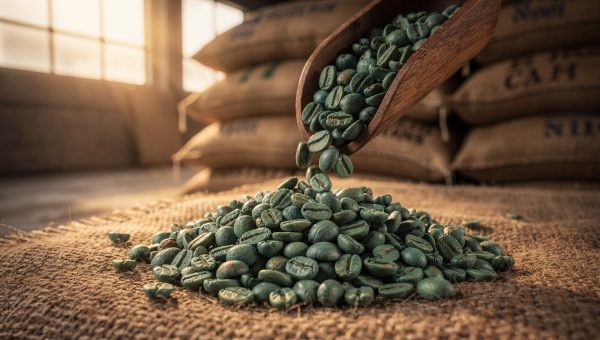
Kenya AA green coffee wholesale refers to the top size grade of Kenyan green coffee sold in bulk to roasters — large, dense beans screened to 17/18 with the bright, blackcurrant-forward cup Kenya is known for. Intercontinental Coffee Trading (ICT Coffee), a San Diego-based specialty green coffee importer serving roasters across the USA and Canada, sources Kenya AA lots and evaluates every one with Q Grader-certified staff before it ships.
What the “AA” in Kenya AA Actually Means
Kenya grades green coffee primarily by bean size, and AA is the largest size grade. AA beans are retained on a screen 17/18 — roughly 7.2mm and up — which makes them the biggest, and usually the most sought-after, beans in a Kenyan harvest. The next grade down, AB, blends screen 15 and 16 beans and still cups beautifully, while smaller grades like C and TT generally feed commercial blends.
One point worth being clear about: AA describes size, not flavor. As Perfect Daily Grind explains, a very large bean is graded AA in Africa and “Supremo” in Colombia — the label tracks screen size, not the cup score. Bigger beans aren’t automatically better, but in Kenya the AA grade tends to come from the same well-managed estates and factories that also produce the cleanest cups, which is why the two so often line up.
Why Roasters Pay a Premium for Kenya AA
Kenya AA earns its reputation in the cup. Expect bright, juicy acidity, a heavy, syrupy body, and the blackcurrant, tomato, and dark-berry notes that have made Kenyan coffee a benchmark for many roasters. That intensity comes from a combination of high-altitude growing, the SL-28 and SL-34 varieties widely planted in Kenya, and meticulous wet processing at centralized factories.
For a roaster, that profile is a menu anchor. A well-sourced Kenya AA holds up as a single origin, carries a pour-over program, and adds clarity and acidity to a blend. If you want to see how Kenya fits alongside other African origins, ICT’s African coffee flavor profile guide maps the regional differences, and the breakdown of what makes Kenyan coffee taste like Kenyan coffee goes deeper on the chemistry behind the acidity.
How Kenya’s Grading and Auction System Works
Most Kenyan specialty coffee moves through the Nairobi Coffee Exchange auction, where lots are cupped and bid on by exporters before they reach importers. Coffee is milled, graded by size and density, and sampled before sale, so a Kenya AA lot offered for wholesale has already passed through several rounds of sorting.
That said, grading systems differ by country and aren’t interchangeable. The Specialty Coffee Association’s green coffee standards set defect and quality benchmarks, but each origin layers its own terminology on top. Kenya’s size-first system is one approach; Ethiopia grades by defect count instead. ICT’s green coffee grading guide breaks down how to read these designations across origins so an AA on the spec sheet means what you think it means.
What to Check Before You Buy Kenya AA Wholesale
Size grade alone won’t tell you whether a lot is worth buying. Ask for the cup score and the defect count. The SCA classifies specialty-grade coffee as having zero primary defects and no more than five full secondary defects in a 350g sample, per the association’s green coffee classification standard. A genuine specialty Kenya AA should clear that bar and carry a documented score of 80 or higher.
Then ask about harvest date and moisture. Kenya’s main crop is harvested roughly October through December, and fresher crop holds its signature acidity longer. Request a sample and cup it yourself before committing to bags — a step ICT builds into every wholesale relationship through its live inventory and sample program.
Sourcing Kenya AA for your roastery? Request up to four free samples from ICT Coffee — every Kenya AA lot is cupped and verified by our Q Grader team before it ships. No commitment to get started.
Roasting Kenya AA: What the Density Means for Your Profile
Kenya AA beans are large and dense, a result of slow maturation at altitude. Dense beans need more energy to develop, so many roasters charge a little hotter and extend the development phase to bring out Kenya’s sweetness without scorching the surface. Under-developed Kenyan coffee turns sharp and grassy; pushed too far and you lose the fruit that makes it special.
Because of that acidity and clarity, Kenya AA shines as a light-to-medium filter roast. Blended into espresso it tends to dominate, carrying through milk — a feature or a problem depending on your recipe. Cup each lot before scaling a profile.
What Drives the Price of Kenya AA
Kenya AA sits at the higher end of green coffee pricing for a few reasons: limited AA-grade volume per harvest, strong global demand, auction competition among exporters, and labor-intensive washed processing. Larger screen grades command premiums, so AA usually costs more per pound than AB from the same washing station.
For roasters, the practical question is value, not just price. A documented, fresh-crop Kenya AA with a strong cup score earns its premium when it anchors a single-origin offering customers come back for. ICT publishes current Kenya AA and other Kenyan lots on its Kenyan coffee origin page and broader wholesale green coffee inventory, with screen size and scoring data attached.
How ICT Sources and Verifies Kenya AA
ICT’s Q Grader-certified team evaluates each Kenya AA lot against the SCA specialty standard — defect count, screen size, moisture, and cup score — before it’s offered. When ICT lists a lot as Kenya AA specialty grade, those numbers have been checked against the actual beans by a credentialed evaluator, not copied from export paperwork. For remote buyers, that verification is the difference between ordering with confidence and gambling on a grade label.
Frequently Asked Questions About Kenya AA Green Coffee Wholesale
Is Kenya AA always better than Kenya AB?
Not always. AA is a larger bean and usually commands a higher price, but AB lots from the same factory can cup nearly as well — sometimes with slightly more balance. If your budget is tight or you want a softer acidity, a high-scoring AB is worth cupping side by side with AA before you decide.
What does Kenya AA taste like?
Most Kenya AA shows bright, wine-like acidity, a full body, and blackcurrant, berry, and tomato notes. The exact profile depends on the factory, variety, and crop year, which is why cupping the specific lot matters more than relying on the grade alone.
How much Kenya AA do I need to order to buy wholesale?
It depends on the importer. ICT works with roasters at a range of volumes and offers samples before any bag commitment, so you can evaluate a Kenya AA lot before scaling up. Request a quote for current minimums, harvest dates, and pricing.
Get Q Grader-Verified Kenya AA for Your Roastery
ICT Coffee sources Kenya AA green coffee wholesale and evaluates every lot against SCA specialty standards — screen size, defect count, moisture, and cup score — before it reaches you.
Request your free Kenya AA samples or call us at (619) 338-8335 to talk through current Kenyan inventory.
Sources
- Specialty Coffee Association — Coffee Standards (green coffee grading and quality benchmarks)
- Specialty Coffee Association — Green Coffee Classification and defect categories
- Perfect Daily Grind — Kenya AA, Colombia Supremo: Understanding Coffee Grading
�������������������������������������������������������������������������������������������������������������������������������������������������������������������������������������������������������������������������������������������������������������������������������������������������������������������������������������������������������������������������������������������������������������������������������������������������