
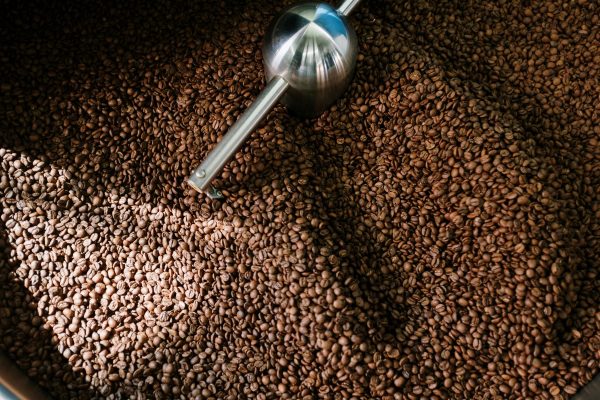
Airflow is one of the most influential variables in coffee roasting, directly affecting how heat transfers to the bean, how flavors develop, and how consistent the final product turns out batch after batch. Whether you’re roasting on a small sample roaster or a full-production drum system, the way air moves through the roasting chamber shapes everything from first crack timing to final color uniformity.
For roasteries sourcing green coffee from suppliers like Intercontinental Coffee Trading, understanding airflow means getting the most out of every origin. High-quality unroasted beans carry distinct flavor profiles tied to their growing region, processing method, and varietal — and proper airflow management during roasting is what allows those characteristics to come through in the cup. Without it, even the best lots can end up flat, uneven, or overdeveloped.
How Airflow Works Inside a Coffee Roaster
The Role of Convection in Heat Transfer
Coffee roasters use two primary methods of heat transfer: conduction and convection. Conduction happens when beans make direct contact with the hot drum surface. Convection occurs when heated air passes over and through the bean mass.
Airflow controls the convection side of this equation. The fan or blower system pulls or pushes air through the drum, carrying heat energy with it. More airflow increases the rate of convective heat transfer. Less airflow shifts the balance toward conduction.
Why the Balance Matters
Most modern drum roasters rely on a combination of both heat transfer methods. Adjusting airflow changes the ratio between conduction and convection, which in turn changes how quickly the bean surface heats relative to the bean core. This has a direct impact on roast evenness and flavor clarity.
Airflow and Rate of Rise
Controlling the Roast Curve
Rate of rise (RoR) refers to how quickly the bean temperature increases over time. It’s one of the most tracked metrics in specialty coffee roasting. Airflow adjustments offer a way to manage RoR without changing gas or burner settings.
Opening the damper increases convective energy hitting the beans, which can accelerate the rate of rise. Closing it down reduces that energy, slowing things down. Experienced roasters use airflow adjustments mid-roast to smooth out the curve and avoid stalls or crashes.
Avoiding a Flick or Crash
A sudden spike in RoR late in the roast — sometimes called a “flick” — can push beans past the intended development point. A crash, where RoR drops too quickly, can leave beans underdeveloped inside. Both problems are manageable with well-timed airflow changes.
The Connection Between Airflow and Flavor
Light Roasts and Airflow Sensitivity
Light roasts are especially responsive to airflow settings. Because these roasts aim to preserve origin character, any unevenness in heat application shows up in the cup as grassy, sour, or papery notes.
Higher convective airflow during the drying phase helps remove moisture evenly. Pulling back slightly before first crack allows the beans to develop without scorching the surface. This kind of controlled airflow profiling brings out the acidity, sweetness, and complexity that roasters look for in single-origin lots.
Medium and Dark Roast Considerations
In darker roast profiles, airflow plays a different role. Here, the goal shifts toward managing smoke extraction and preventing baked or ashy flavors. Keeping airflow high enough to clear chaff and smoke while maintaining consistent heat input is the balancing act.
Too much airflow at the end of a dark roast can strip heat too quickly and stall development. Too little leaves smoke trapped in the drum, which embeds itself into the beans.
Chaff and Smoke Removal
Keeping the Roast Environment Clean
Airflow doesn’t just transfer heat — it also clears byproducts. During roasting, the silverskin (chaff) separates from the bean and needs to be pulled out of the drum. Smoke from the Maillard reaction and caramelization stages also needs an exit path.
If airflow is too low, chaff can accumulate and ignite, and smoke can settle back onto the beans, adding unwanted bitter or carbon-like flavors. Proper airflow keeps the roasting environment clean and gives you a more accurate read on what’s happening inside the drum.
Common Airflow Mistakes Roasters Make
Even experienced operators can run into airflow-related issues. Here are some of the most frequent problems:
- Setting the damper to one position and leaving it there for the entire roast, ignoring phase-specific needs
- Increasing airflow too aggressively after first crack, causing a rapid temperature drop
- Running with low airflow during the drying phase, leading to uneven moisture removal and tipping
- Failing to account for batch size — smaller batches need less airflow to maintain consistent heat contact
Recognizing these patterns is the first step toward correcting them. Most airflow problems show up clearly in cupping, often as muddled acidity, uneven development, or off-flavors that don’t match the bean’s expected profile.
Adjusting Airflow by Roast Phase
Drying Phase
During the drying phase, moderate to high airflow helps drive off free moisture from the bean surface. This sets up the rest of the roast by ensuring beans enter the browning phase at a consistent moisture level.
Browning and Maillard Phase
As the roast moves into the browning phase, reducing airflow slightly allows conductive heat to play a bigger role. This gives the Maillard reaction time to develop without rushing through important flavor-building stages.
Development Phase
After first crack, airflow decisions determine the final character of the roast. A small increase in airflow can help manage the exothermic energy released during first crack, while keeping development time on track.
How Green Coffee Quality Affects Airflow Decisions
Density, Moisture, and Origin
Not every coffee responds to airflow the same way. Bean density, initial moisture content, and processing method all influence how air interacts with the bean during roasting.
High-altitude beans with greater density require more total energy to roast evenly. Washed coffees with lower moisture may dry faster and need reduced early airflow to avoid rushing. Natural processed lots, which tend to carry more sugars on the surface, may benefit from higher airflow to prevent scorching.
These variables are why sourcing matters. When you start with well-prepared, carefully selected green coffee, airflow adjustments become fine-tuning rather than damage control. Intercontinental Coffee Trading supplies roasteries with traceable, high-quality green beans from origins worldwide — contact our team to find the right coffees for your roast profiles.
Key Takeaways for Roasters
Understanding airflow is not about memorizing one perfect setting. It’s about building awareness of how air movement interacts with heat, bean mass, and roast phase to shape the outcome.
Here’s what to focus on:
- Track your damper or fan settings alongside your temperature data for every roast
- Make airflow adjustments in small increments and evaluate results through cupping
- Match your airflow profile to the specific coffee you’re roasting, accounting for density and moisture
- Review your chaff collection system to make sure it’s not restricting airflow unintentionally
Airflow is a tool, and like any tool, its value depends on how intentionally you use it. Combined with good sourcing, consistent profiling, and attentive cupping, proper airflow management helps roasters produce better coffee with greater repeatability.