 Sampling First Is Not Optional — It’s Professional Practice
Green coffee samples for roasters are the foundation of responsible sourcing. Committing to a wholesale purchase without cupping the lot first is like hiring a key employee without an interview — the paperwork might look fine, but you won’t know what you actually have until it’s too late to change course. ICT Coffee, a specialty green coffee importer based in San Diego, CA, offers up to 4 free green coffee samples to qualified roasters across the USA and Canada. The process of requesting, evaluating, and responding to samples is also the beginning of the importer relationship — and how you handle it matters.
Sampling isn’t just for first-time buyers. Even experienced roasters who have worked with a supplier for years should cup new lots before committing. Harvest conditions vary, processing can differ between seasons, and a lot that scored 85 last year may perform differently this year. The sample is your quality check, and it costs you nothing to use it.
What to Tell ICT Coffee When You Request Samples
The quality of your sample request shapes the quality of what you receive. An importer who knows nothing about your program will send whatever is easiest to sample; an importer who understands your roastery will select lots that are genuinely relevant. Before you reach out to request samples through ICT’s program, prepare this information.
- Your primary roast style — light, medium, or dark — and whether you’re sourcing for filter, espresso, or both
- The flavor profile your customers respond to — fruit-forward, chocolate and nut, balanced and clean, high acidity, low acidity
- Your current origins and what gaps you’re trying to fill — if you have strong South American coverage, maybe you need East Africa; if your espresso blend lacks sweetness, say so
- Your production volume and likely order quantity if a sample converts — this helps ICT ensure the lots they sample are actually in sufficient quantity to fulfill your order
- Any certifications your wholesale accounts require (organic, fair trade, etc.) that need to be present in the sourcing chain
The SCA Cupping Protocol: What It Requires and Why It Matters
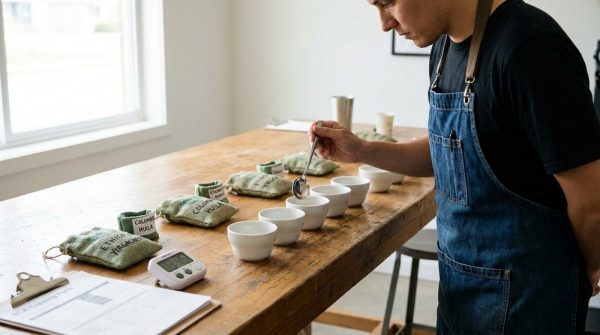
A proper SCA cupping protocol requires water temperature of 200°F (93°C) and a coffee-to-water ratio of 8.25g per 150ml to produce consistent, evaluable results. This isn’t arbitrary precision — these parameters are calibrated to produce a consistent extraction that reveals the coffee’s actual character rather than an artifact of preparation. If you cup one lot at 195°F and another at 205°F, you’re not comparing the coffees; you’re comparing your water temperatures.
Set up your cupping table with duplicate cups of each sample (ideally five cups per lot, SCA standard), use a consistent grind size (slightly coarser than pour-over), and measure your water and coffee by weight, not volume. Grind fresh immediately before pouring — pre-ground coffee oxidizes within minutes and will give you a degraded picture of the lot’s quality.
Request Your Free Samples — ICT Coffee offers up to 4 free green coffee samples to qualified roasters across the USA and Canada.
Evaluating the Dry Aroma and Break
The green coffee cupping process begins before you pour water. After grinding, assess the dry aroma immediately — it’s volatile and fades quickly. Note the intensity and quality: does it smell clean, or are there off-notes like mustiness, ferment, or woodiness? These aromas often signal problems that will appear in the cup.
After pouring 200°F water and letting the crust sit for four minutes, break the crust by pushing it gently with your spoon. Put your nose to the bowl at the moment of the break — the wet aroma at the break is one of the most revealing moments in cupping. Floral, fruit, chocolate, and grain notes appear here clearly. Off-notes that weren’t obvious in the dry aroma often reveal themselves at the break. Document what you smell before the cup cools.
Flavor, Acidity, Body, and Aftertaste: What to Look For
After the crust settles and the cup temperature drops to around 160°F, begin tasting. The SCA cupping form evaluates flavor, acidity, body, balance, uniformity, clean cup, sweetness, and aftertaste. You don’t need to score every attribute formally on your first cuppings, but you should note what you find in each category.
Flavor is the broadest category — the overall impression of the cup including any fruit, chocolate, nut, floral, or savory notes. Acidity quality matters more than intensity — bright, clean lemon acidity is desirable; sharp or harsh acidity suggests processing problems. Body is the tactile weight of the liquid in your mouth. A thin body may indicate low-density beans or harvesting issues; excessive heaviness in a washed coffee can suggest over-fermentation. Aftertaste should be clean and pleasant — any bitterness that lingers beyond 30 seconds is a concern.
Turning a Sample Into a Long-Term Relationship
Free green coffee samples wholesale are not the end of the conversation — they’re the beginning. After you cup a sample, give ICT Coffee real feedback regardless of whether you’re placing an order. “This lot showed bright citrus acidity that works well for our filter program, but the body was lighter than we’d like for our espresso blend — do you have anything from the same region with more structure?” is useful information that helps an importer build a better understanding of your roastery.
Importers remember roasters who communicate well. A roaster who gives specific, accurate feedback on samples — even when they don’t buy — demonstrates professionalism that earns better sample selection on the next round. Over time, ICT’s team will learn your program well enough to proactively alert you when a lot that matches your profile becomes available, before it’s widely offered. That kind of proactive service only comes from a relationship built on real communication.
What Makes an Importer Relationship Work Long-Term
Beyond the quality of the coffee, long-term importer relationships are built on trust, transparency, and mutual investment. Pay invoices on time. Communicate about your order schedule so your importer can manage allocation. Tell them when something was off — not to complain, but because accurate quality feedback helps them improve their evaluation and sourcing. Ask questions about origin conditions and processing details, because those questions signal that you care about the supply chain and help the importer tell a better story about their lots.
ICT Coffee holds cupping events in San Diego where roasters can cup alongside the ICT team. Attending these events — even once a year — deepens the relationship in ways that email and phone calls can’t replicate. Cupping together builds shared language about quality and flavor that makes every future sourcing conversation more efficient.
Frequently Asked Questions
How many free samples can I request from ICT Coffee?
ICT Coffee offers up to 4 free green coffee samples to qualified roasters. Request samples that genuinely match what you’re looking for — not just whatever is available. Being specific about your roasting program and target profile helps ICT select samples that are actually useful to you.
Do I need to roast samples on a specific profile before cupping?
For evaluation purposes, a medium roast to SCA cupping standards (roughly Agtron 55–65 on whole bean) provides the most consistent baseline for comparing lots. If you’re also evaluating how a lot performs at your production roast level, do a second roast at your target profile after the evaluation roast. Compare both results before deciding.
What’s the correct water temperature for cupping green coffee samples?
The SCA standard is 200°F (93°C) measured at the moment of pour. Water that’s boiling (212°F/100°C) will over-extract and produce harsh results; water below 195°F may under-extract and hide acidity. Use a thermometer, not guesswork — the temperature matters enough to measure.
How long after requesting samples should I expect to receive them?
Delivery times for samples depend on your location and current shipping conditions. Domestic samples from ICT’s US warehouse network typically arrive within a week. Contact ICT Coffee directly for a more specific timeline based on your location and the lots you’re requesting.
Ready to Get Started?
Cupping before committing is the professional standard — and ICT Coffee makes it easy with up to 4 free green coffee samples for qualified roasters across the USA and Canada.
Request Your Free Samples and let ICT Coffee’s Q Grader-certified team help you find the right coffees for your roastery.