
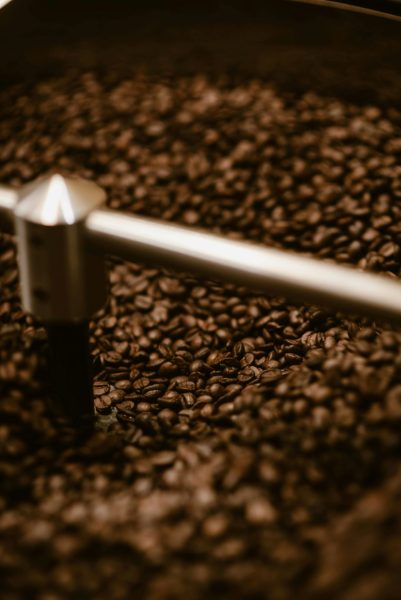
What Is Development Time Ratio?
Development time ratio (DTR) measures the percentage of total roast time that occurs after first crack. This metric helps roasters achieve consistency and dial in flavor profiles with precision. First crack marks the moment coffee beans undergo an exothermic reaction, releasing steam and expanding in size. The time between this audible pop and the moment you drop the beans into the cooling tray determines your development time.
To calculate DTR, divide the development time by the total roast time, then multiply by 100. For example, if your total roast takes 10 minutes and development lasts 2 minutes, your DTR is 20%.
Understanding this ratio gives roasters a repeatable framework for flavor development. Too short, and you risk grassy, underdeveloped flavors. Too long, and you may bake the coffee or push it toward bitter, carbony notes.
Why Development Time Ratio Matters for Flavor
Origin Character vs. Roast Character
DTR directly influences how coffee tastes in the cup. During development, Maillard reactions and caramelization create the complex flavors that define specialty coffee. Controlling this phase allows roasters to emphasize origin characteristics or develop roast-driven flavors.
A shorter development time preserves acidity and highlights origin-specific notes like fruit, florals, and terroir. Longer development reduces brightness and brings forward chocolate, caramel, and body.
A Comparable Metric
Roasters use DTR alongside other variables like rate of rise and charge temperature to build profiles. However, DTR offers a simple percentage that’s easy to compare across different batches and roast lengths.
Calculating Your Development Time Ratio
The formula is straightforward:
DTR = (Development Time ÷ Total Roast Time) × 100
Start your timer at charge and note when first crack begins. Continue timing until you drop the roast. Subtract first crack time from total time to get development time in seconds or minutes.
Logging Your Data
Many roasters log this data in software like Cropster or Artisan. Tracking DTR across batches helps identify patterns and troubleshoot issues when a coffee doesn’t cup as expected.
Typical DTR Ranges by Roast Level
Different roast levels call for different development ratios. While personal preference and specific coffees will influence your approach, these ranges provide a starting point:
- Light roasts: 15–20% DTR
- Medium roasts: 20–25% DTR
- Medium-dark roasts: 25–30% DTR
- Dark roasts: 30%+ DTR
These numbers aren’t absolute rules. Some roasters achieve excellent light roasts at 18% while others prefer 22%. The key is consistency within your own profiles and understanding how adjustments change the cup.
Factors That Affect Development Time
Several variables influence how long development should last for a given coffee.
Bean Density and Moisture
Bean density plays a significant role. High-altitude coffees with dense cell structures often require longer development to fully break down starches and develop sugars. Softer, lower-grown beans may develop faster.
Moisture content also matters. Freshly harvested coffees with higher moisture levels absorb heat differently than rested or aged beans.
Batch Size and Equipment Settings
Batch size impacts heat transfer and may require adjustments to maintain your target DTR. Smaller batches often develop faster than full-capacity loads.
Drum speed, airflow, and gas pressure all interact with development. Changing one variable typically requires compensating with others to hit the same flavor target.
Common DTR Mistakes to Avoid
Even experienced roasters run into development issues. Watching for these problems helps maintain quality:
- Roasting too fast to first crack, leaving insufficient time for development without scorching
- Extending development too long in an attempt to add body, resulting in baked or flat flavors
- Ignoring batch-to-batch variation in green coffee and applying the same DTR regardless of origin or processing method
- Focusing only on DTR while neglecting rate of rise during development
- Dropping immediately after first crack ends, assuming development is complete
These mistakes often stem from treating DTR as a fixed target rather than a flexible tool. Your ratio should respond to the coffee in the drum, not dictate it.
How Green Coffee Quality Impacts Development
The development phase can only reveal what’s already present in the bean. High-quality green coffee with proper processing, drying, and storage gives roasters more to work with during development.
The Role of Defects and Storage
Defective or poorly stored beans may produce flat, muted flavors regardless of your profile. Uneven moisture content leads to inconsistent development within the same batch, resulting in a mix of underdeveloped and overdeveloped beans.
Starting with Better Raw Material
Sourcing green coffee from trusted suppliers ensures your roasting efforts translate to better cups. Intercontinental Coffee Trading supplies specialty-grade green beans from origins worldwide, giving roasters the raw material they need to hit their flavor targets. Explore our current offerings to find coffees that match your roasting style.
Fine-Tuning Your Approach
Development time ratio works best as one tool among many. Pair it with sensory evaluation to understand what each percentage means for a specific coffee.
Building Your Reference Library
Cup your roasts at different DTRs to map how flavor changes. Take notes on acidity, sweetness, body, and aftertaste at 18%, 22%, and 25% to build a reference for future batches.
Adjusting for Each Coffee
Remember that first crack timing itself varies by coffee. A dense Ethiopian may hit first crack later than a Brazilian, affecting your total roast time and DTR calculation. Adjust expectations based on the bean.
Consistent logging, regular cupping, and willingness to experiment turn DTR from a number into a practical guide for roast development.