
 What Anaerobic Processing Actually Is
Anaerobic natural process coffee wholesale has become one of the most-requested categories in specialty green sourcing — and one of the most misunderstood. ICT Coffee, a specialty green coffee importer based in San Diego, CA, sources and vets anaerobic and co-fermented lots from producing regions across the world for roasters in the USA and Canada. Before you source an anaerobic lot, it helps to understand what’s actually happening in the tank — because that knowledge shapes how you roast it, price it, and describe it to your customers.
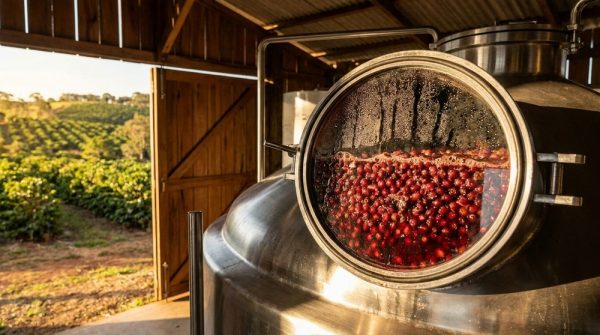
In anaerobic processing, coffee cherries (whole or depulped) are placed into sealed tanks from which oxygen is evacuated or displaced with CO2. Without oxygen, the fermentation environment shifts from aerobic (standard) to anaerobic — a fundamentally different microbial and biochemical process. Lactic acid bacteria dominate instead of acetic acid producers, and the range of volatile compounds created is significantly broader. The result is a coffee with flavor compounds that don’t appear in washed or traditionally natural processed lots.
How Anaerobic Differs From Natural and Washed Processing
Understanding anaerobic coffee requires understanding what it’s departing from. In a washed coffee, the fruit is removed quickly, fermentation is brief and controlled, and the resulting cup is clean and transparent. In a traditional natural, the whole cherry dries in the open air for weeks — aerobic fermentation happens slowly, and the cup picks up fruit and fermentation notes that are generally predictable by origin.
Anaerobic processing supercharges fermentation by creating a controlled environment with precise inputs — temperature monitoring, pressure measurement, and timing that’s documented to the hour on well-run farms. The anaerobic coffee flavor profile that results can include intense tropical fruit (mango, pineapple, passion fruit), wine and vinous notes, and occasionally a lactic or yogurt-like quality that some consumers describe as complex and others find polarizing. Here’s the thing: that polarity is part of what makes anaerobic lots a menu tool, not a menu replacement.
Co-Fermentation: Adding Another Layer
Co-fermented coffee beans wholesale takes anaerobic processing a step further. In co-fermentation, additional ingredients — fruit juice, whole fruits, cinnamon, alcohol, or other fermentable materials — are introduced into the sealed tank alongside the coffee. The added ingredients provide additional fermentation substrates and introduce new flavor compounds that the coffee beans absorb during the process.
Co-fermented lots from Colombia and Brazil have reached extraordinary cup scores at international competitions — cups that taste unmistakably of specific fruits because those fruits were literally present in the tank. The specialty coffee processing trends 2026 are accelerating co-fermentation precisely because consumers and competition judges have responded to the results. For roasters targeting the premium single-origin espresso market or differentiated subscription offerings, a well-sourced co-fermented lot can become a signature product.
Request Your Free Samples — ICT Coffee offers up to 4 free green coffee samples to qualified roasters across the USA and Canada.
Where This Trend Came From
Anaerobic processing gained significant specialty market traction following World Barista Championship competitions in the late 2010s. Competitors using anaerobic lots — particularly from Colombia and Ethiopia — began winning at national and world levels, which put the processing method on the radar of specialty roasters globally. What started as a competition tool has since become a commercial category, with producers in Brazil, Bolivia, Indonesia, and Yemen experimenting with the method alongside the Latin American pioneers.
The experimental coffee processing for roasters category is now diverse enough that “anaerobic” alone doesn’t tell you enough. Anaerobic washed, anaerobic natural, double anaerobic, thermal shock, carbonic maceration — each variation produces different results and requires slightly different sourcing questions. ICT’s Q Grader team evaluates experimental lots with the same structured process applied to conventional coffees, which provides a quality baseline that competition buzz alone cannot give you.
How to Roast Anaerobic Lots Differently
Anaerobic coffees respond to heat differently than washed lots, and this is one of the most practical pieces of knowledge a roaster needs before loading their first anaerobic batch. The residual fruit compounds and altered cellular structure from extended fermentation can cause uneven development if you apply a standard washed-coffee profile. In practice, many roasters find that anaerobic naturals benefit from a lower charge temperature, a slower rate of rise through the drying phase, and careful monitoring at first crack — which can come earlier and more dramatically than expected.
Development time ratios that work for washed coffees (typically 20–25% of total roast time) may need adjustment for anaerobics. Some roasters find that slightly extending development produces better integration of the fruit compounds; others find that a shorter, hotter finish gives the lot the brightness it needs. Cup multiple roast profiles before settling on your production approach — anaerobic lots often reward experimentation in the roaster the same way they reward it at the farm level.
What to Ask ICT Coffee When Sourcing Experimental Lots
Sourcing anaerobic coffee requires more specific questions than sourcing a washed lot, because the processing parameters have a direct effect on the cup you’ll receive. When talking to ICT Coffee about an anaerobic or co-fermented lot, ask for fermentation time (hours or days in the tank), temperature during fermentation (controlled temperature is a mark of a serious producer), what was added if it’s a co-fermented lot, the SCA cupping score, and any notes on how the lot has responded to different roast approaches.
ICT’s Q Grader team evaluates every lot that enters their inventory — including experimental processing types — and can provide cupping notes that help roasters understand what they’re working with before the first batch. You can also review ICT’s coverage of microlot and specialty lot sourcing for broader context on how to evaluate high-value, low-volume lots like these.
Why This Trend Is Here to Stay
Some specialty coffee trends are cyclical — they peak in competition, generate roaster interest, and then fade when the next technique emerges. Anaerobic processing is different because it represents a genuine expansion of flavor possibility, not just a novelty. The science of controlled fermentation is understood well enough now that producers can reliably replicate results — which means the category is moving from unpredictable to consistent, from experimental to commercial.
The fundamentals of arabica quality still apply to anaerobic lots — great processing starts with great cherry selection at the right ripeness. Anaerobic technique applied to under-ripe or damaged cherries produces defect-laden cups, not interesting complexity. What makes ICT’s approach to sourcing experimental lots trustworthy is the same thing that makes their conventional sourcing trustworthy: Q Grader evaluation catches problems before bags leave the warehouse, regardless of how exotic the processing label on the bag might be.
Frequently Asked Questions
What does an anaerobic coffee flavor profile typically taste like?
Anaerobic naturals commonly show intense tropical fruit notes — mango, pineapple, passion fruit — alongside wine-like or vinous qualities and a heavy body. The exact profile depends heavily on the origin, the variety, the fermentation duration, and the temperature during fermentation. Co-fermented lots can also show notes specific to whatever was added to the tank (citrus, berries, cinnamon, etc.).
Are anaerobic coffees harder to roast than washed coffees?
They require more attention and a willingness to adjust your standard profile. The altered cellular structure and residual fermentation compounds can cause unexpected behavior at first crack and during development. Start with a lower charge temperature than you’d use for a comparable washed lot, roast a few development batches before going to production, and cup each roast carefully before committing to a profile.
How do I know if an anaerobic lot was processed well or just over-fermented?
The distinction between intentional anaerobic complexity and defect-driven fermentation is real, and it shows up in the cup. An over-fermented lot will have harsh, vinegary, or unpleasant acidity, muted sweetness, and a rough finish. A well-processed anaerobic will have intensity and complexity with underlying sweetness and a clean, long aftertaste. ICT Coffee’s Q Grader evaluation catches over-fermented lots before they enter inventory — which is a practical reason to source experimental lots through an importer with formal quality control rather than buying blind from a broker.
Can I request anaerobic natural process coffee wholesale from specific origins through ICT Coffee?
Yes. ICT sources anaerobic and co-fermented lots from multiple origins including Colombia, Ethiopia, and Brazil, with availability changing by harvest cycle. These lots tend to move quickly. Contact ICT Coffee and request samples of any experimental processing lots currently in inventory — and be specific about whether you’re looking for naturals, washed anaerobics, or co-fermented lots, as the flavor profiles differ significantly.
Ready to Get Started?
Anaerobic and co-fermented lots are some of the most exciting greens in specialty coffee right now — and ICT Coffee’s Q Grader team vets every experimental lot before it reaches your roastery.
Request Your Free Samples and let ICT Coffee’s Q Grader-certified team help you find the right coffees for your roastery.